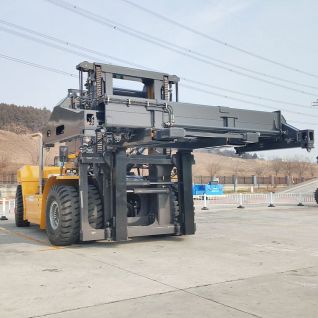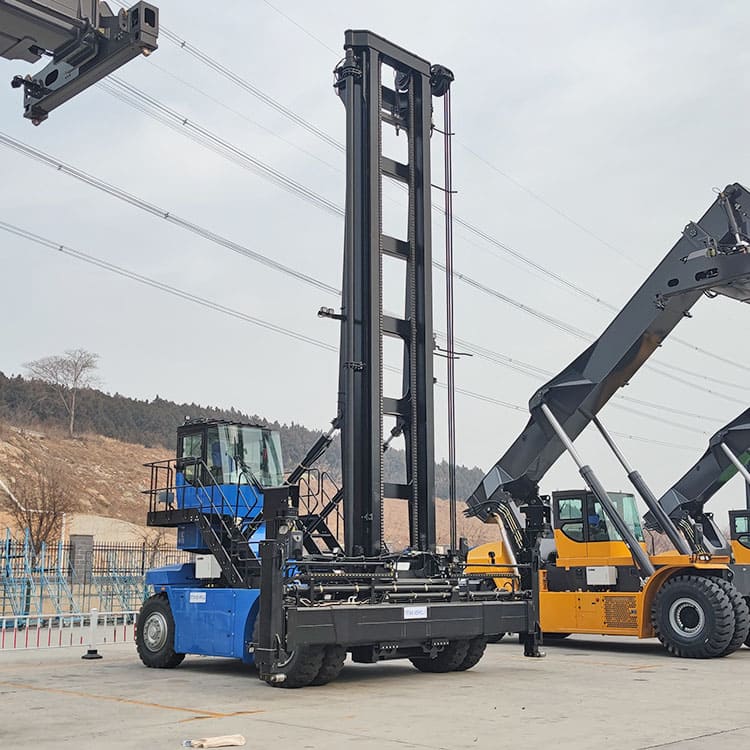
The cargo container forklift is a specialized machine built to handle the lifting, stacking, and movement of empty shipping containers. It plays an essential role in ports, freight yards, and logistics hubs across Uganda, where container operations demand speed, flexibility, and safety.
With reliable vertical lifting capacity and efficient stacking performance, the container forklift price represents a practical solution for businesses aiming to maximize yard space and maintain smooth daily operations even under tough working conditions.
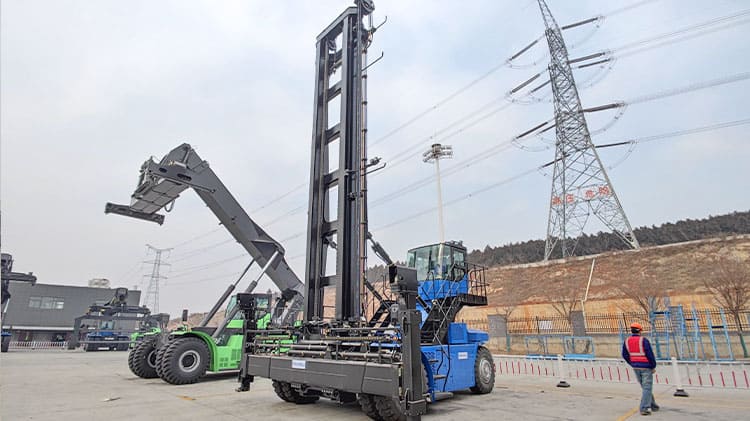
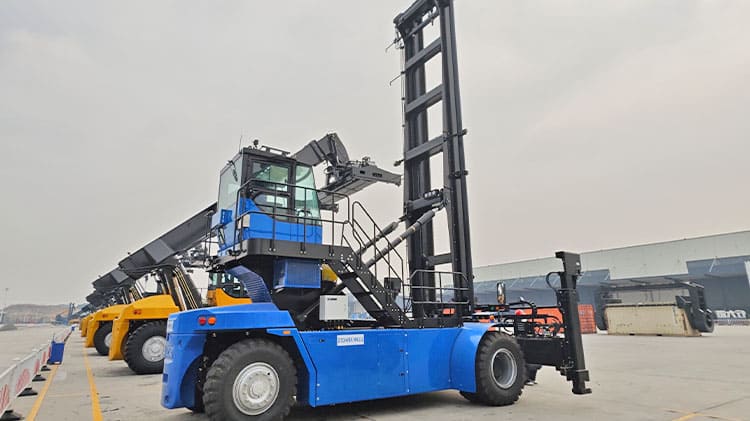
Engine Model: VOLVO TAD851VE
Rated power/speed: 185/2200kW/rpm
Maximum torque/speed: 1160/1350Nm/rpm
Exhaust emission standards: 3 stages
Gearbox model: DANA 13.7HR32334
Drive axle model: Kessler D81PL488
Spreader Model: XDJ90
Side shift distance: 600mm
Self-respect: 4.7t
Suitable: ISO 20/40 ft container
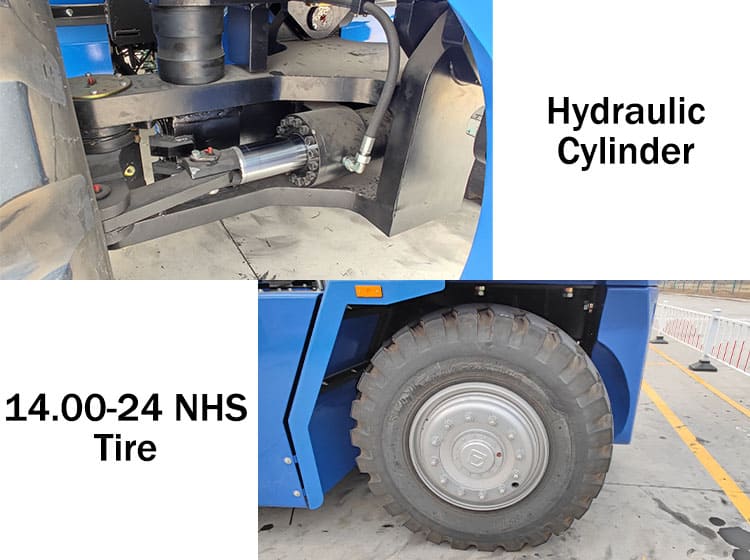
Tires: 14.00-24-28PR
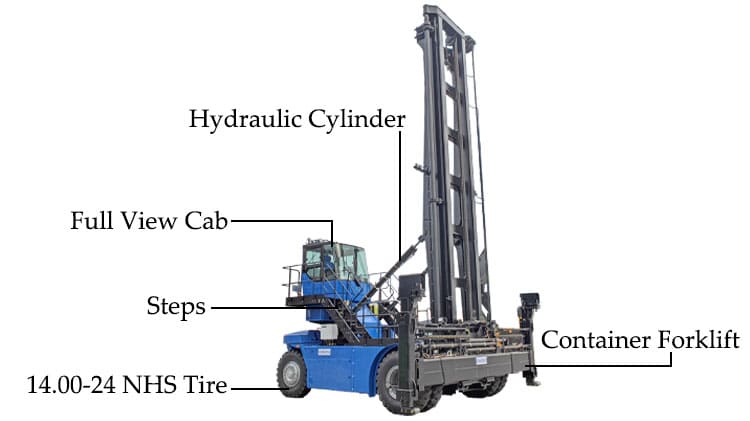
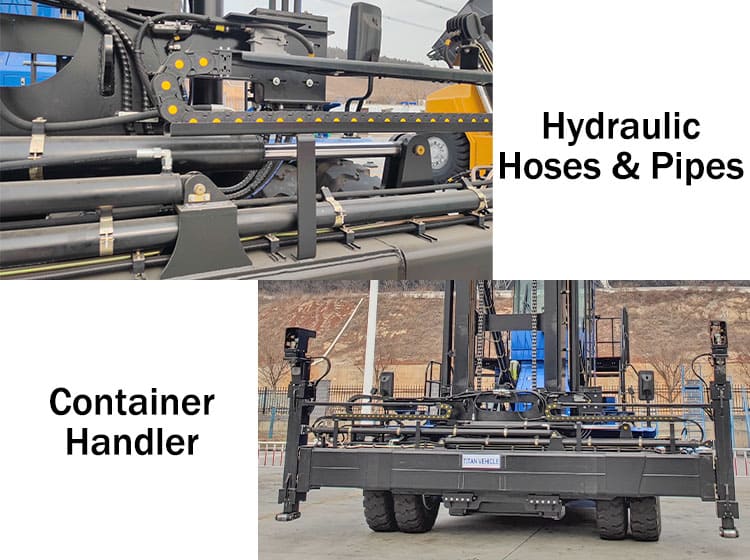
At the top of the mast sits the spreader, the main component that grips and locks containers securely during lifting and transport. Most units of the cargo container forklift are equipped with hydraulic twist locks and side clamps, enabling them to manage both 20-foot and 40-foot containers with ease.
The hydraulic quick-release system reduces downtime between moves, while added functions such as side-shift and tilt help operators align containers precisely—an especially valuable feature when working on Uganda's uneven ground surfaces.
Strength and balance form the foundation of this container forklift price design. Built with a heavy-duty steel chassis and a low center of gravity, the forklift ensures stability even under heavy workloads.
Power is supplied by high-torque diesel engines, though hybrid and electric variants are gradually being adopted to meet changing environmental requirements. The drivetrain, combined with a responsive hydraulic system, delivers consistent performance and reliable braking, even when operating at full mast extension.
The hydraulic system itself is engineered for smooth and accurate control. Pumps and valves regulate mast and spreader movement with precision. On advanced models, electronic controllers or programmable logic systems manage multiple functions at once, improve safety interlocks, and allow remote diagnostics. These upgrades reduce operator fatigue and improve handling accuracy, while also lowering the likelihood of operational errors.
Performance also depends heavily on the powertrain. While diesel engines remain the most common choice, hybrid and electric power systems are gaining ground in Uganda as operators seek lower emissions and higher efficiency.
These engines are paired with heavy-duty automatic transmissions that provide seamless gear shifting, strong traction, and improved fuel economy. The drivetrain not only powers the forklift's movement but also supplies energy to hydraulic operations, ensuring that travel and lifting functions remain synchronized.
Mobility is another strength of the cargo container forklift. Equipped with large pneumatic or solid tires, the machine absorbs shocks and maintains stability on rough ground. Rear-axle steering, and in some cases multi-directional steering, gives operators flexibility to make tight turns and maneuver in confined yards. This ability is particularly useful in Uganda's busy container terminals, where storage areas are often crowded and require precise handling.
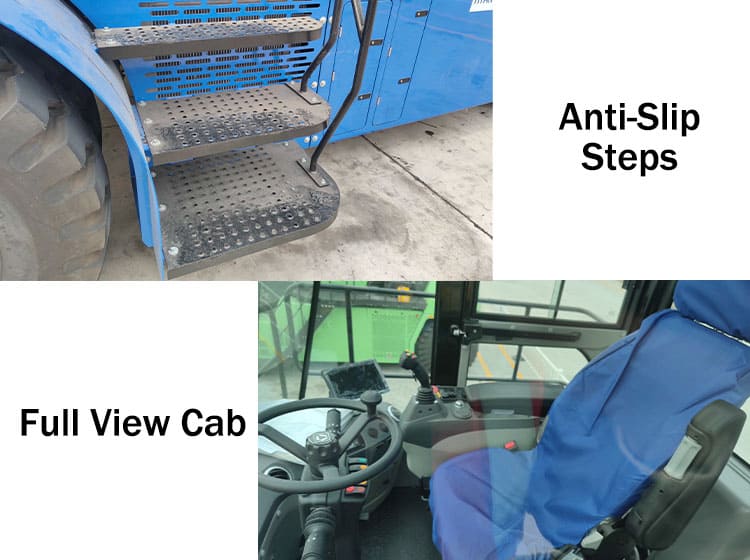
The operator's cabin has been designed with both comfort and functionality in mind. Elevated above the chassis and surrounded by wide glass panels, it provides clear visibility of the spreader and stacking area.
Inside the cab, operators benefit from ergonomic seating, adjustable controls, climate regulation, and vibration-reducing features. Modern display panels provide real-time feedback on load weight, lift height, and machine condition, making operation safer and more efficient. These ergonomic and technological improvements help reduce fatigue during long working shifts.
Safety remains one of the most critical aspects of the container forklift price. Standard protective measures include load monitoring sensors, overload alarms, speed limiters, and rollover protection systems.
Many machines are also fitted with cameras, radar assistance, and proximity sensors to enhance awareness, particularly when reversing or working in tight spaces. Increasingly, telematics systems are being integrated into the cargo container forklift, allowing fleet managers to track machine performance, monitor maintenance schedules, and ensure compliance with operational requirements.
The cargo container forklift is purpose-built for the demands of modern logistics. In Uganda, where efficiency and reliability are key, investing in a machine at the container forklift price provides businesses with a dependable solution for container handling. This balance of strength, precision, and safety ensures long-term value and consistent productivity in container transport operations.